
The Moment You Notice It
You're grabbing something off the shelf in the garage, the door groans open behind you, and you catch yourself thinking: has this thing always sounded like that? Maybe you notice there's no little sensor box near the floor on either side of the track. Maybe the spring looks like a single thick coil with no visible cable running through it. Maybe the opener itself is a beige box with a pull-chain light and a logo you haven't seen in decades. Now you're standing there debating with your spouse — is this a ticking time bomb, or is everyone overreacting?
The honest answer is: some of it matters a lot, and some of it doesn't matter at all. Here's how to tell the difference.
What Actually Needs to Change
A handful of safety features became standard on garage doors and openers well after many older systems were installed. If your door predates these, they're worth retrofitting regardless of how well the door otherwise works.
- Photo-eye sensors. If your opener has no small sensor units mounted a few inches off the floor on each track, the door has no way of knowing if a kid, pet, or bike is in its path before it closes. This is the single most important upgrade for any older opener and is a straightforward add-on or justifies an opener replacement.
- Auto-reverse function. Test it: lay a 2x4 flat on the ground where the door closes. If the door doesn't reverse on contact, the force/limit settings are off or the opener lacks the feature entirely. This isn't a tweak you postpone.
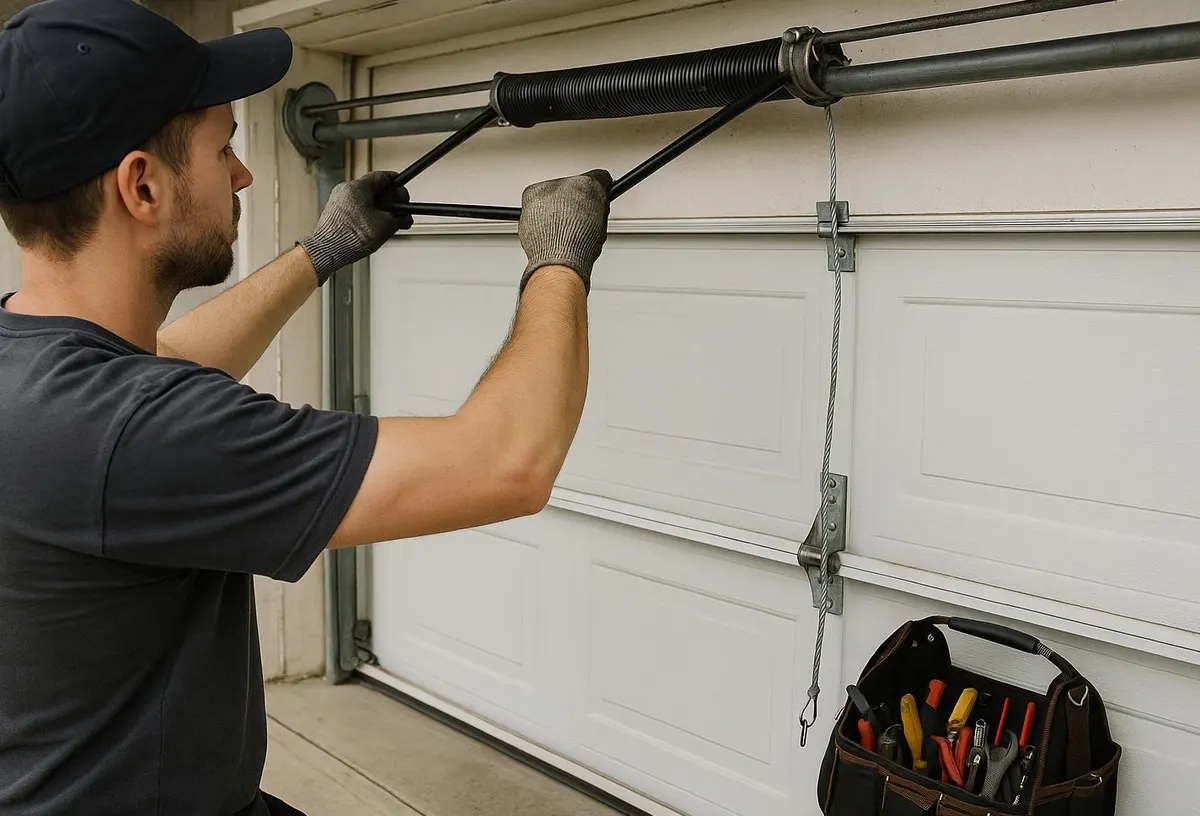
- A safety cable through the torsion spring. Older torsion spring setups sometimes have no containment cable running through the spring's center. If that spring ever snaps under tension, it can whip loose with real force. Adding the cable is inexpensive compared to what it prevents.
- Frayed cables or pitted rollers. These wear out regardless of the door's age, but on a system this old they've likely never been replaced. Visible fraying, flat spots on rollers, or a door that shudders partway through its travel are signs the cable and roller assembly needs attention before it fails mid-cycle.
What You Can Leave Alone
Not everything old is a liability.
- A solid steel or wood panel door with no rust-through or warping. If it's not swelling, delaminating, or sagging at the corners, the panel itself can keep doing its job for years yet. Replacing a door purely because of its age, when the panel is sound, is money spent on nothing.
- A manual lock or slide bolt. These still work fine mechanically and don't need to be swapped out unless you're upgrading to a smart opener with its own locking logic.
- Cosmetic wear — faded paint, a dated window pattern, a slightly different hardware finish than the rest of the house. None of that affects how the door performs.
Why This Matters More Here Than in a Dry Climate
In this part of Florida, humidity and afternoon downpours put real stress on hardware that's already decades old. Moisture works into unsealed seams and swells wood panels; it accelerates rust on springs and tracks that have lost their original coating. And because this area falls under wind-load expectations for storm season, an older door and track system that was never rated for wind pressure is a different conversation than a cosmetic one — a door that performs fine on a calm day can behave very differently under sustained gusts. If your door is original to a home built well before current wind-load expectations existed, that's worth a professional look specifically for structural bracing, not just safety sensors.
When to Call Lake Hamilton Overhead Door Co
If you're finding yourself nodding along to more than one item above — no sensors, a spring with no safety cable, cables that look tired, or you're just not sure what decade your opener is from — that's the point to call in a second opinion rather than keep debating it at home. We handle garage door maintenance and tune-ups that catch exactly these gaps, and we do garage door cable and roller repair when wear has gone past the point of a quick fix. We'll tell you plainly what's a real risk and what's fine to leave as-is.
If your garage door has been quietly aging since before you owned the house, let's settle the argument for good. Call Lake Hamilton Overhead Door Co today and we'll take a look, no guesswork required.